A Year of Feminist Classics

Because they're better together :)

Feminism is for Everybody: Further Discussion

Feminism is for Everybody cover

I’m  not sure about anyone else but I’ve been slowly working my way through the book and while finding it a bit repetitive in parts, am still finding it interesting. It’s not quite what I was expecting, but am still happy that we chose it as our first read. I thought I’d post a few discussion questions today that I’ve been thinking about.

First off I want to ask – do you think this book would convince someone who didn’t identify as a feminist why it is important to do so / that they might want to do so?

hooks defines feminism simply as:

“A movement to end sexist oppression”

What do you think of that definitely? Personally I love the definition, especially when we get into her supporting ideas behind it, but I want to know what others think of it. Does it work? Why or why not?

Introduction to Feminism is for Everybody

Feminism is for Everybody cover

Each time I leave one of these encounters, I want to have in my hand a little book so that I can say, read this book, and it will tell you what feminism is, what the movement is about. I want to be holding in my hand a concise, fairly easy to read and understand book; not a long book, not a book thick with hard to understand jargon and academic language, but a straightforward, clear book – easy to read without being simplistic.

As hooks explains in the introduction, this book is for all of us who have had questions about why we identify as feminist directed at us. It is also for those of us who may wonder what feminism is all about. I’ve often wanted a book like this and so personally I’m really looking forward to reading what she has to say. I’m hoping that this book is indeed all that she says it will be, if so I may be bulk ordering it to lend to many family, friends, and co-workers.

We chose to start with this book, this year, because we want to highlight that feminism, and this project, is for everyone. All opinions (constructive and with no personal attacks, however) are welcome and we look forward to great discussion amongst all of us. I do hope that many of you will join us in this book and find out how broad feminism really is, and learn an easy way to answer some of those annoying questions.

Through the month we will be discussing the  book in more detail and talking about how feminism is, indeed, for everyone. We will be asking you what feminism is for you, as well, through a few exercises. Additionally, we will be talking about and exploring the life of bell hooks, a truly remarkable activist and author.

Introducing another Year of Feminist Classics

As Iris mentioned in our previous post, we would like to extent the Year of Feminist Classics into 2012. However, the chaos of the holiday season and several life events prevented us from getting organised as quickly as we’d have liked, and as a result we ended up deciding to run the project from February 2012 to February 2013. This will give everyone more time to prepare, and will also prevent us from having to wrap things up amongst the end of the year rush in the future.

There’s another important change in how the project is run: we have invited several other co-hosts to join us. All of them are bloggers we admire and whose perspectives we know will contribute a lot to our discussions, and many were active participants last year. Now that there are more of us, we’ll be working in teams whenever possible to make sure there’s always someone around even if life gets in the way of reading and blogging.

Over the past few weeks, the new team tried to come up with a diverse, well-rounded reading list that addresses some of the gaps and blind spots we found in the texts we read last year. Some of our choices are more recent than the ones from the first year’s list, but we believe they’re all more than important and influential enough to be called classics.

Without further ado, here’s our reading list for the New Year:

  • FebruaryFeminism is for Everybody by bell hooks (Amy)
  • MarchThe Book of the City of Ladies by Christine De Pizan (Jean)
  • AprilWhipping Girl: A Transsexual Woman on Sexism and the Scapegoating of Femininity by Julia Serano (Cass)
  • MayJane Eyre by Charlotte Brontë read alongside Wide Sargasso Sea by Jean Rhys (Iris)
  • JuneStone Butch Blues by Leslie Feinberg (Emily)
  • JulyLittle Women by Louisa May Alcott (Nancy)
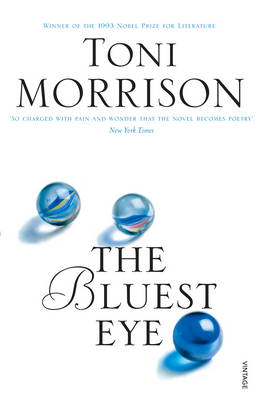
  • AugustThe Bluest Eye by Toni Morrison (Lauren)
  • SeptemberBorderlands/La Frontera by Gloria Anzaldua (Melissa)
  • OctoberThe Feminine Mystique by Betty Friedan (Jodie)
  • NovemberBeyond the Veil by Fatema Mernissi (Ana)
  • DecemberWomen, Race, and Class by Angela Davis (Emily Jane)
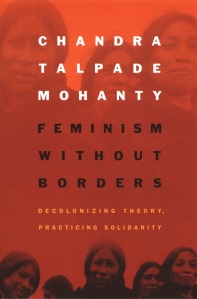
  • JanuaryFeminism Without Borders: Decolonizing Theory, Practising Solidarity by Chandra Talpade Mohanty (Eva)

We invite you all to think of this project as an informal feminist reading group. You don’t have to commit to joining the discussion every month, but we’d love to hear your thoughts whenever you’re able to. We’re very excited to read these books together, and we hope we’ll have the opportunity to continue to learn from each other and from you.

So, who’s with us? Let us know and we’ll be happy to add you to this year’s participants list. We’d also really appreciate it if you helped us spread the word to other readers.

Thank You & See You Next Year?

We wanted to thank all of you for participating in the Year of Feminist Classics project in 2011. We know we have not been the greatest hosts, at least 3 out of 4 hosts experienced some difficulties this year and because of this we were absent a lot more than we should have been. Nevertheless, we hope you found this project as fulfilling as we did. Moreover, we hope you will consider joining us next year!

We are still putting the details together and we hope to reorganise a little so as to make the project more workable for all hosts. More details will follow in the upcoming week or so, we are just putting the final touches to the list. In composing it, we have aimed to take your recommendations and comments on the 2011 list in account. If there is anything you think we should consider, be it in books to read or organisation-wise, please feel free to leave a comment.

Again, thank you for joining in on our somewhat messy, but hopefully worthwhile, journey into the works that have defined and changed feminism through the years.

Happy 2012 to all of you!

Sister Outsider: Discussion Questions and Wrap-Up

Happy holidays to all who celebrate them, and a lovely few weeks to all who don’t! I hope you’ve been able to take some time off for yourselves and your loved ones, and maybe even been able to curl up with a good book or two :)

Having seen Audre Lorde referenced all over the place within feminist circles, I was relieved to finally read her work for myself. This collection was more diverse than I thought it would be. I wasn’t expecting so much about poetry as a means of expression, for example, or the first and last pieces about Russia and Grenada, respectively. And honestly, I didn’t find those topics as striking as the others.

My favorite parts of Lorde’s essays were the ones in which she details some of the microaggressions she faces regularly as a black, lesbian, feminist woman by feminists and non-feminists, men and women, and people of all races alike (the bullet points on p. 126 in the essay “Uses of Anger”, for example). These allow us to see just how insidious notions of superiority really are, and how easily dismissal of others disguises itself as something benign. As Lorde makes clear, this is no less true for feminists than it is of anyone else, regardless of their academic standing or level of “awareness”. This is a really important criticism that remains relevant as feminists (and others) continue learning to understand each other better through the acknowledgment of difference while moving away from generalizing experience in attempts to build solidarity.

At the same time, I couldn’t help but feel that Lorde made some uneasy generalizations herself. I felt this mainly in her discussion of female eroticism…(what the heck is that?!). In her interview with Lorde, Adrienne Rich asked her to speak to similar criticisms, one of which was that, in response to the essay “Poetry is Not a Luxury”, she’d “heard it remarked that here you are simply restating the old stereotype of the rational white male and the emotional dark female” (p. 100). Her response was complex and nuanced. Personally, I wasn’t completely sure what to make of it, so my first question is:

Did you find her response to this question convincing and/or satisfying? Do you think the criticism itself is valid?

Another thing I think we should discuss is the theme of anger. I understand that anger is a contentious topic within feminism, because it is so often used to unfairly belittle, dismiss, misdefine, or oversimplify feminist claims and arguments. At the same time, I agree with Lorde that anger is an appropriate response to oppression, that it can lead to productive work, and that it’s important both to feel it when it occurs and to be willing to deal with it. Feminism is not defined by anger, nor are feminists. We are all human, though, and anger is a human emotion. So:

How do you understand the relationship between anger and oppression, or anger and feminism? Is there one? What kind of role can/should it play? Why does it so often seem easily dismissed?

“The master’s tools will never dismantle the master’s house”. I know I wrote in my introduction that I would be focusing on this essay, as it seems to be the most widely quoted. It was one of my favorites, but I hope no one minds terribly that I ended up inspired to ask questions about others as well ;) In any case, it was easy for me to agree that real change requires a complete restructuring of power relations and that Lorde’s expression of this need was effective and particularly eloquent. But, easier said than done! My question is:

How do we recognize the master’s tools for what they are?

Finally, I was interested in Lorde’s discussions of parenting a boy as a lesbian feminist in an era when separatism was more seriously regarded (by some) as a serious option. In recent years I’ve seen a lot more discussion about not only feminist parenting, but feminist parenting of boys, which I see as a really positive development. Girls seem to receive the bulk of feminist education, be it from their teachers or their parents…but boys need it too! I don’t have any specific questions about this, but if any parents would like to weigh in on what they thought of Lorde’s essays on the subject, or on their own experience, I’d be delighted.

Anything else? If there’s something you’d like to discuss or think I’ve neglected anything important, do feel free to bring it up!

Oh, and please stick around for updates on plans for 2012. We may have slacked off on hosting duties at times (ahem, sorry)…but I know the first year of feminist classics has been both challenging and fulfilling for us and hopefully some of you as well. Looking forward to hearing from you (even if it has to wait until the holiday season has passed) and thanks for your participation!

Introduction to Sister Outsider, by Audre Lorde

I am excited to be hosting discussions about Sister Outsider this month, as I’ve been looking forward to this one all year! I know that many of us will be very busy leading up to the winter holidays, but most of these essays look short and, well, anything’s bound to feel a breeze in comparison to Butler! (I admit that I did not get to it last month, but have struggled through the section on performativity for many a college course).

According to Wikipedia, Audre Lorde was, in her own words, a “black, lesbian, mother, warrior, poet” who wrote throughout the ’60′s, ’70′s, and ’80′s. Like bell hooks, she wrote compellingly about racism within U.S. feminist movements and argued that recognition of, and respect for, differences amongst women is crucial for any movement seeking to build meaningful relationships of solidarity between them. This is pretty standard feminist discourse, now, I think; back in Lorde’s day, though, this was a highly contentious claim and a lot of other feminists reacted defensively, marking her an “outsider”.

Still according to Wikipedia,

In her essay “The Master’s Tools Will Never Dismantle the Master’s House”, Lorde attacked the underlying racism of feminism, describing it as unrecognized dependence on the patriarchy. She argued that, by denying difference in the category of women, feminists merely passed on old systems of oppression and that, in so doing, they were preventing any real, lasting change. Her argument aligned white feminists with white male slave-masters, describing both as “agents of oppression”.

This is the essay I see mentioned most frequently in conjunction with Lorde’s name, so it is the one around which I will probably focus discussion. I will be reading all of them, though, so if there’s another essay you think is particularly interesting or important that I don’t bring up in my next few posts, please don’t hesitate to interject! Lorde had a huge impact on feminist thought, so I’m sure there will be no shortage of worthy discussion topics :)


Introducing Gender Trouble by Judith Butler

Judith Butler’s Gender Trouble was first published in 1990, and is now regarded as not only a key text for anyone interested in feminist theory, but also as one of the founding texts of queer theory. Butler’s background is in philosophy; her engagement with poststructuralist theory and her convoluted writing style make her work notoriously demanding. Butler has addressed criticism based on her writing’s impenetrability by saying that shaking up language is part of the process of shaking up the status quo. While I think Butler’s position certainly invites discussion, it would be a shame to let her style steal attention away from her ideas.

Gender Trouble was the text that first introduced the concept of gender performativity: the idea that what we consider to be “real gender” is a cultural construction sustained by “the tacit collective agreement to perform, produce, and sustain discrete and polar genders”. Butler critiques gender essentialism, a stance that even some feminist thinkers have aligned themselves with, and says in the preface to the 10th anniversary edition:

It was and remains my view that any feminist theory that restricts the meaning of gender in the presupposition of its own practice sets up exclusionary gender norms within feminism, often with homophobic consequences.

I found this an interesting idea, because if there’s one thing I certainly don’t want feminism to do, it’s to replace our current set of rules about how each gender should or shouldn’t act with a different but equally restrictive set. I don’t think feminism is generally guilty of doing this, but it’s also not a monolith, and as such there will naturally be people identifying with the term whose positions I don’t agree or identify with.

One of the most common criticisms of Butler’s work is its alleged lack of practical application: Reading Women by Stephanie Staal, which we reviewed here on the blog earlier this year, was an example of this. Staal writes about how she became frustrated with Butler’s reliance on theory and didn’t find a way to connect her ideas with her actual life, which is what she had done beautifully and insightfully with the authors she had previously discussed. Reading the preface to my edition of Gender Trouble left me with the impression that this is something Butler has heard countless times before. She says:

The point was not to prescribe a new gendered way of life that might then serve as a model for readers of the text. Rather, the aim of the text was to open up the field of possibility for gender without dictating which possibilities ought to be realised. One might wonder what use “opening up possibilities” finally is, but no one who has understood what it is to live in the social world as what is “impossible”, illegible, unrealisable, unreal, and illegitimate is likely to pose that question.

Again, this is an interesting idea: Butler suggests that her work is easier to dismiss by those whose identities easily fit into the current gender binary. This isn’t to say that there’s anything wrong with having an uncomplicated gender identity, of course – not as long as we do acknowledge that other possibilities exist.

Also, it’s important to remember that as much as there is nothing inevitable or “natural” about our current ideas about gender, categories of identity do matter to people. Butler acknowledges this when she says:

One is a woman, according to this framework, to the extent that one functions as one within the dominant heterosexual framework, and to call the frame into question is perhaps to lose something of one’s sense of place in gender.

I look forward to seeing how Butler develops these ideas as I continue to read Gender Trouble. I have briefly studied Butler’s work in the past, but this will be my first time reading her most famous book in its entirety. Because Gender Trouble is a complicated work and November is full of “real life” demands for many people, I’d like to invite you all to perhaps post your impressions of the book as you read it, even if you’re not done by the end of the month. I can’t wait to hear what everyone makes of Gender Trouble.

Update on “Ain’t I A Woman?” and the “Third World Women and the Politics of Feminism Anthology”

I am very sorry about being such a lousy host this past month, or rather, disappearing completely. Life has been crazy and I cannot give you any more excuses than that. Below you will find a small introduction to Bell Hooks. As I haven’t finished the book myself, I do not have discussion questions, but I do hope some of you have written about it and will post the links here. I will edit the post as people comment. I personally only finished the introduction, but knew immediately that I had to finish it sometime soon. She raises such interesting points and it baffled me how I never looked beyond the issue of whether race was at all mentioned in feminist text, to ask how it was represented.

bell hooks is the pen name of Gloria Jean Watkins. She was born on September 25, 1952 in Hopkinsville, Kentucky. Her childhood was spent in a working class family of five sisters and one brother and her school career started out at a racially segregated school. She received a BA in English from Stanford University and a Master in the same subject from the University of Wisconsin-Madison in 1967. Her doctorate studies were completed in 1983 with a dissertation on Toni Morrison.

Gloria Jean Watkins’ interest revolve around the intersection of race class and gender and how these categories work to perpetrate systems of oppression. Her first book, Ain’t I a Woman? was written as an undergraduate and published while she was not yet a doctorate, in 1981. She published a collection of poems before this book ‘An There We Wept’ in 1978, also under her pen name bell hooks. She choose this name because it was the name of her grandmother, who she says was “known for her snappy and bold tongue, which [she] greatly admired.” The lower case lettering was chosen to distinguish herself from her grandmother.

Ain’t I a Woman has since become an influential work of postmodern feminist thought. In it, bell hooks tackles questions of the devaluation of black womanhood, the marginalisation of black women, the disregard for questions of class and race within feminism and the influence of media and representation on these issues.

Since 1981, she has published a wide range of books, most of which tackle the issues of feminism, race, representation and media from a postmodern perspective.

Have you written about bell hooks’ Ain’t I a Woman? Then leave a comment below and I will compile an overview post as soon as possible.

About the collection of essays that is also listed for this month. We originally included it because of the article “Under Western Eyes” by Chandra Talpade Mohanty. I have reviewed it previously here. It is an interesting article and related to “Ain’t I a Woman?” in that it raises questions about the disregard for colonial discourses in feminist studies.

However, there are many more interesting articles in “Third World Women and the Politics of Feminism Anthology”. There is one, for example, that explores the many ways in which women’s rights and headscarves were used in politics of the Revolution in Iran.

My original idea was to request whether people wanted to read specific articles and then sent me a link, or a review, of the article, by email. I would then compose an over view post or several guest posts throughout the month. If anyone is up for it, I would still like to do so, and post throughout the months November and December.

Again, I am sorry for the rubbish hosting this month.

For anyone who is wondering: I haven’t yet wrapped up “The Second Sex” because it appears only Ingrid reviewed it up to now.

Review: The Beauty Myth by Naomi Wolf

The Beauty Myth coverTitle: The Beauty Myth
Author: Wolf, Naomi
Length: Around 350 pages
Genre: Non-Fiction
Original Published In: 1991

It’s getting nearer to the end of the year and everyone is getting busier and busier, and participation has been dropping off. I know I found it hard to finish the book this month as I’ve been on the road for work. That being said, I’m still so excited to be part of this project and I’m glad I made time to read this book. I still can’t really wrap my head around my full thoughts on it so I’m hoping that some of you have joined me in reading along to discuss some points with me!

Firstly, the idea of the beauty myth as a force – definitely something I agree with. I think that culture definitely affects us in a myriad of ways and the way that beauty is displayed so frequently and in only such a limiting number of ways has definitely contributed to the way things are. I agree with Wolf that the timing of it all seems rather coincidental (or rather, not so coincidental!) and that it is largely a political idea.

That being said… in many cases I found myself thinking Wolf was going a bit too far or exaggerating a bit. I can’t decide if this is because it has been 20 years since she wrote the book, or if even at the time it was a bit extreme. Speaking of which, in some ways it’s hard to believe she wrote the book so long ago, as so much of it is still so relevant. And some of her points have definitely come to pass, like cosmetic surgery becoming more common for men.

At the same time, other ideas, as I said, seem to go too far for me. She takes away the idea that women can still be varied and have multiple reactions to different things in their lives. For example, the idea that women would only like S&M because of the images we see in advertising seems a bit offensive to women who may like S&M (odd example, but I found she just kept going on about it!). Another place where I was a bit unconvinced was the section on religion and how beauty has become like a religion.

My other problems with the book were Wolf’s reliance on gender stereotypes (that men and women are different, and this is how, and that we react differently, there are always different expectations, etc) and her firm views of history. If there is no actual evidence of things jumping to conclusions or using ideas because they fit seem too easy! Lastly, this book and Wolf’s views are aimed, really, at middle- to upper-class white women almost exclusively. Although there was a reference here or there to the damage of the fact that beauty is often considered as “white”, this is mostly ignored. And the book focuses on women who only started working in the 60s and 70s, and who can afford these surgeries and products – which certainly excludes a large percentage of people. I’d have liked to see more about everyone instead of just this privileged group.

In terms of our project I was interested to see how heavily Wolf was influenced by Virginia Woolf, Mary Wollstonecraft, and Simone de Beauvoir. It was neat to see other ideas and books we’ve discussed this year feature in the discussion and arguments that were presented in this title. Definitely made it more interesting to have the background that this project has given me!

I’d like to know from you:

  • How did you react to her idea of the beauty myth as a political construct – do you agree that it exists?
  • What struck you the most (for me it was the section on work and how we are expected to look a certain way, and also the insinuations that we got something because of our looks – always frustrates and upsets me)?
  • What bothered you the most?
  • Do you think we’ve improved or regressed in terms of the beauty myth since Wolf wrote this book?

Finally, please do add your review to the InLinkz collection below to create an easy database for participants to use to find your review and keep the discussion going!


Introduction to The Beauty Myth by Naomi Wolf

Written in 1991, The Beauty Myth explores the issue of the ideal of a perfect beauty to which women are subjected and which women strive to achieve. Culture and society push certain images at women which makes women feel they have to look a certain way.

The book summary reads:

In today’s world, women have more power, legal recognition, and professional success than ever before. Alongside the evident progress of the women’s movement, however, writer and journalist Naomi Wolf is troubled by a different kind of social control, which, she argues, may prove just as restrictive as the traditional image of homemaker and wife. It’s the beauty myth, an obsession with physical perfection that traps the modern woman in an endless spiral of hope, self-consciousness, and self-hatred as she tries to fulfill society’s impossible definition of “the flawless beauty”.

I’ve heard numerous critiques that Wolf in this book deals only with women like her – i.e., moderate to well off white women – but I am hopeful going in to the book that I will be proven wrong. This will definitely be one angle though that I will explore in my discussion of the book. I’m looking forward to what others pull out of the book as well.

Wolf herself has made quite a name for herself recently with some of the things she has been in the news for (that Palin and Bachmann are feminists, even if they work against women’s rights in legislation), that the allegations of sexual assault against Assange are definitely all false, and more. Knowing these facts about her I will most likely be reading into her politics through the book as well.

Has anyone started the book yet? I apologize for getting the introduction post up so late, but am looking forward to what everyone thinks of the book!

Follow

Get every new post delivered to your Inbox.

Join 152 other followers